
A FREE CLASSICAL PILATES SELF-ASSESSMENTTHE ALIGNMENT MAP
A 10-exercise Classical Pilates assessment for active people who want to understand how their bodies are organized — and what happens to that alignment when they move.
You already know you're fit.
You run, strength train, take classes, and know how to work hard.
But how well do you understand how your body organizes itself while you move?
Can you move your leg without moving your pelvis with it?
Can you reach your arms overhead without changing your rib cage?
Can you tell where your spine is moving — and where it isn't?
Mat Fit uses 10 exercises from the Classical Pilates Mat repertoire to help you observe five qualities of intelligent movement:
CENTER • MOBILITY • DISSOCIATION • COORDINATION • CONTROL
Today’s goal isn't perfect alignment.
It's learning to recognize your alignment, notice when it changes, and understand what those changes can tell you about how you move.
No equipment required.
Just you, a mat, and a willingness to pay attention.
This isn’t a pass-or-fail test.
Think of Mat Fit as an evaluation system you can return to regularly to check in with your body and understand what it needs from you today.
The reality is, we are all at the mercy of gravity — all the time.
We sit. We run. We carry bags. We work at desks. We travel. We train. We repeat the same movements and positions day after day.
If you have a body, it's worth checking in with how that body is organizing itself against gravity.
That's what this assessment is for.
As you move through the exercises, you're looking for the places where your alignment begins to change.
Maybe your pelvis moves when your leg circles. Maybe your ribs lift when your arms reach overhead. Maybe one side organizes itself differently from the other. Maybe an exercise that felt effortless last month feels completely different today.
That's information.
Your assessment gives you clues about what needs your attention: what you may want to work on when you step off the mat, and which exercises you might return to, practice, and refine to help bring your body back toward equilibrium.
Think of it as checking the grid lines of your body.
Where are your shoulders in relationship to your ribs?
Your ribs to your pelvis?
Your pelvis to your legs?
Can you maintain those relationships when you add movement, load, speed, or a longer lever?
The goal isn't to hold yourself rigidly in “perfect” alignment.
The goal is to understand your alignment well enough that you can recognize when you've lost your organization — and develop the strength, mobility, coordination, and control to find it again.
We organize the grid lines of your body in the Pilates studio so you can move with more confidence and power outside of it.
Want to experience Classical Pilates in person?
Join me in San Francisco for Pilates → 5K → Social Hour.
Meet the five qualities you're assessing.
Center
Can you organize your trunk while your limbs move?
Center isn't simply about having “strong abs.” We're looking at the relationship between your pelvis, rib cage, and spine as your arms and legs create increasingly difficult movement problems.
Mobility
Can your body access the range the movement requires?
We're not chasing flexibility for flexibility's sake. We're interested in where your movement actually comes from — and whether you have access to the range you need without borrowing it from somewhere else.
Dissociation
Can one part of your body move without everything else moving with it?
Can your femur move inside your hip socket without dragging your pelvis along? Can your arms move without your ribs following them? Your body works as a system, but individual parts still need the ability to perform different jobs.
Coordination
Can different parts of your body perform different jobs at the same time?
Running is a perfect example. One arm moves forward while the opposite leg moves forward. Your trunk manages the forces between them. Your breathing continues underneath all of it. Coordination is your ability to organize those moving pieces.
Control
Can you own the movement you have?
Can you slow it down? Stop it? Reverse it? Reproduce it? More range isn't automatically better.
Your Alignment Map range ends where your control ends.
Keep these five qualities in mind. You're going to see them show up again and again.Exercise 01/10The Hundred
ALIGNMENT MAP FOCUS:CENTER • COORDINATION • CONTROL
How far can your limbs move away from your center before your trunk has to change?

The Hundred begins our assessment by establishing the relationship between your center and your limbs.
As your legs straighten and travel farther away from your body, their leverage increases.
The question isn't: how low can you get your legs?
It's: how low can your legs travel before your pelvis or low back changes position?
Can your ribs and pelvis remain organized while the legs create progressively more demand? Can your arms pump vigorously without your shoulders and rib cage bouncing along with them? Can you continue to breathe while maintaining that organization?
Notice:
Can you maintain your trunk organization as your legs reach away?
How low can your legs travel before your pelvis or low back changes?
Can your arms pump without disturbing your trunk?
Can you breathe fully while maintaining the position?
Does your alignment deteriorate as you fatigue?
YOUR ALIGNMENT MAP TAKE AWAY
Lower isn’t better.
Your Hundred reveals: how well can your center support increasingly long levers?
WHY THIS MATTERS FOR RUNNERS
Running connection: Trunk stability while the legs move
Running repeatedly asks your legs to move underneath you while your trunk manages the forces traveling through your body.
The Hundred lets you explore how well you can maintain the relationship between your rib cage and pelvis while your legs move farther away from your center. As the legs lower, their leverage increases — and your trunk has to respond without simply changing position to accommodate them.
For a runner, this is an opportunity to notice whether you can create movement from the hips while maintaining an organized trunk.
THINK ABOUT IT
Can your legs create force and movement without taking your trunk along for the ride?
Exercise 02/10The Roll-Up
ALIGNMENT MAP FOCUS:CENTER • MOBILITY • DISSOCIATION • CONTROL
Can you articulate your spine without losing the organization of your upper body?
The Roll Up begins before you ever leave the mat.
Start lying flat with your legs long and your arms reaching toward the ceiling. Slowly reach your arms back toward the mat behind you.
Before going any farther, notice what happens to your upper body.
Checkpoint 1 — Arms overhead
Can you reach your arms behind you while keeping your upper back and rib cage connected to the mat?
As the arms travel overhead, notice whether your ribs begin to protrude or lift away from the mat. If they do, you've found useful information: your arms have traveled beyond the range in which you can currently maintain the organization of your trunk.
Bring the arms forward slightly until you can reconnect the ribs and upper back.
That's your range today.
You're not trying to force your hands to the floor. You're looking for the relationship between shoulder mobility and rib-cage organization.
Ask yourself:
How far can my arms travel overhead before my ribs begin to lift?
Can my upper back remain broad and connected to the mat?
Does one shoulder feel different from the other?
Can I breathe normally while maintaining this position?
If I decrease my range slightly, can I find a more organized position?
Checkpoint 2 — The Roll Up
From there, begin your Roll Up.
Can you bring your arms forward and initiate the movement through your trunk rather than throwing your arms for momentum?
Notice how your spine leaves the mat.
Can you progressively peel the head, shoulders, ribs, and spine away from the mat, or is there a point where your body wants to move as one rigid piece?
Ask yourself:
Can I roll up without using momentum?
Can my legs remain long and grounded?
Where is my “sticky spot”?
Do my ribs suddenly thrust forward as I move through a difficult point?
Can I maintain the shape of my trunk as I reach forward?
Checkpoint 3 — The return
Now reverse it.
The way you return to the mat may tell you even more than the way you came up.
Can you control your pelvis and sequentially return your spine to the mat, or do you reach a point where gravity takes over?
Once your upper back and head return, reach the arms overhead again.
Can you finish in the same organized position you started in?
What you're assessing
Shoulder + upper-back mobility
Can your arms travel overhead without requiring your rib cage to lift and your trunk position to change?
Spinal articulation
Can your spine progressively lift one bone at a time rather than moving as one rigid unit?
Center
Can you organize your ribs and pelvis while your arms and spine move?
Dissociation
Can movement occur at the shoulders without automatically creating movement through the rib cage and spine?
Control
Can you move against gravity using your strength, not momentum, on the way up — and control gravity on the way back down?
YOUR ALIGNMENT MAP TAKE AWAY
Touching your toes isn’t the goal.
The assessment is noticing where your shoulder range ends and your rib cage begins compensating for it. Then, as you Roll Up, you're asking the same question in a different way: where can your body move while maintaining its organization — and where does that organization begin to change?
Your Roll Up reveals: how well can you coordinate shoulder mobility, rib-cage organization, and spinal articulation as you move against gravity?
WHY THIS MATTERS FOR RUNNERS
Running connection: Rib-cage organization, shoulder mobility + spinal movement
Your arms don't run independently of the rest of you. Your arm swing, rib cage, spine, and pelvis are all part of the same moving system.
The Roll Up gives you an opportunity to assess whether your shoulders can move overhead without requiring your ribs to protrude, and whether your spine can articulate while your pelvis and legs remain organized.
Why does that matter for running? Your upper body needs enough freedom to move without creating unnecessary movement elsewhere. If moving your shoulders consistently requires you to change the position of your rib cage and spine, that relationship may also influence how you organize yourself when you're upright and moving.
The Roll Up also asks you to control your spine against gravity rather than simply holding your torso rigid.
THINK ABOUT IT
Can your upper body move freely without disrupting the organization underneath it?
Exercise 03/10Single Leg Circles
ALIGNMENT MAP FOCUS:MOBILITY • DISSOCIATION • CONTROL
How much of your hip mobility actually belongs to your hip?
Single Leg Circles give you a very clear environment for observing the relationship between your leg and your pelvis.
One leg reaches toward the ceiling while the opposite leg remains long on the mat.
Now circle the lifted leg.
The question isn't simply how large you can make the circle.
How large can you make your circle before your pelvis has to help you?
Notice whether the femur can move freely inside the hip socket or whether the pelvis is being pulled along with it.
A smaller, controlled circle may tell you more about your usable hip mobility than an enormous circle created by moving the entire pelvis.
That doesn't mean pelvic movement is inherently wrong. As the Classical exercise progresses, larger circles may incorporate controlled, intentional movement.
The important distinction is:
Can you tell the difference between movement you're choosing and movement you can't control?
Notice
Can your opposite leg remain long and organized on the mat?
Can you maintain the organization of your pelvis?
How large can your circle become before your pelvis begins to join?
Can you maintain the organization of the leg throughout the circle?
Is one direction easier than the other?
Is one hip noticeably different from the other?
Can you make the circle smaller and more precise?
YOUR ALIGNMENT MAP TAKE AWAY
Bigger circles doesn’t necessarily mean better hip mobility.
Your range ends where your control ends.
Your Single Leg Circles reveal: can your leg move freely inside your hip while your pelvis remains organized?
WHY THIS MATTERS FOR RUNNERS
Running connection: Hip mobility independent of the pelvis
This is one of the most directly relevant Alignment Map exercises for runners.
Every stride requires one femur to move in the hip socket while your pelvis and trunk manage the rest of your body.
Single Leg Circles let you see how much movement you can create at the hip before your pelvis has to join the movement. If you make the circle enormous but your pelvis rolls with your leg, you haven't necessarily demonstrated more usable hip mobility — you've changed where the movement is coming from.
For runners, we're interested in developing enough freedom at the hip that the leg can move without asking the pelvis and low back to manufacture all of the additional range.
THINK ABOUT IT
Are your glutes and abdominals working together to keep your pelvis organized as your leg moves?
Exercise 04/10Rolling Like a Ball
ALIGNMENT MAP FOCUS:CENTER • COORDINATION • CONTROL
Can your spine maintain its shape and track evenly along the mat?
Rolling Like a Ball gives you a unique opportunity to use the mat itself as feedback.
Start by sitting directly in the center of your mat. Draw your knees toward your chest, hold your ankles, and balance behind your sit bones. Create a compact, rounded shape through your spine.
Then roll backward along the length of your spine and return to your starting balance.
The goal isn't simply to get down and get back up.
Pay attention to where you land.
Checkpoint 1 — Can you create the ball?
Before you roll, notice your starting position.
Can you bring your knees comfortably toward your chest? Can you hold your ankles while maintaining your balance? Can you create an even curve through your spine rather than collapsing into one particular area? Can you balance without putting your feet down?
Your ability to create the starting shape matters. The more evenly you can distribute the curve through your spine, the more smoothly you have the potential to roll along it.
Checkpoint 2 — Follow your spine
As you roll backward, notice the pathway your body takes across the mat.
Ideally, you're trying to roll along the center line of your spine rather than falling heavily into one particular area or consistently drifting toward one side.
Think of your spine like the curved surface of a wheel. You're trying to create a smooth enough curve that your body can roll backward and forward without getting stuck, flattening out, or changing direction.
Notice:
Does one part of your back hit the mat more heavily?
Is there a section you seem to skip over?
Do you consistently roll toward your right or left side?
Does the shape of your body change as you roll?
Do you need to kick your legs to generate enough momentum to return?
You're not trying to “fix” anything yet.
You're collecting information.
Checkpoint 3 — Where did you land?
Before your first repetition, notice exactly where you're sitting in relation to the front and center of your mat.
Roll back and return.
Are you still there?
Repeat the exercise several times.
If you began facing straight toward the front of your mat but gradually find yourself turned, shifted, or traveling toward one edge, take note.
Your mat has essentially become a set of grid lines underneath you.
Consistently drifting toward one side can reveal a right-to-left asymmetry in how you're organizing and moving through your spine. One side may be interacting with the mat differently from the other.
The goal isn't to diagnose why from this exercise alone. The goal is simply to recognize:
My body isn't traveling symmetrically right now.
That's valuable information to take into the rest of your practice.
Checkpoint 4 — How does your spine feel afterward?
Rolling Like a Ball also gives the spine a very different experience from the compression and loading it encounters throughout everyday life.
You're repeatedly moving a rounded spine across the mat, creating a gentle massage-like effect along the back.
Rather than thinking of “decompression” as something you achieve once and permanently keep, notice how your spine feels after several controlled repetitions.
Do you feel more spacious? More mobile? More aware of the individual sections of your back? Does sitting upright afterward feel different?
That sensory information matters, too.
Notice
Can you comfortably create a compact, rounded shape?
Can you balance without putting your feet down?
Can you roll smoothly along the length of your spine?
Does one area of your back make noticeably heavier contact with the mat?
Do you consistently drift toward one side?
After 3–5 repetitions, are you still facing straight forward?
Can you return to balance without kicking your legs or changing your shape?
Does your spine feel different after you finish?
YOUR ALIGNMENT MAP TAKE AWAY
Can you use your center to create—and control—your momentum?
Rolling Like a Ball asks your deep abdominals to maintain a compact, rounded shape as your entire body moves through space, building core strength while gently massaging the spine and challenging your balance and coordination. The goal is to control your momentum, maintain your shape, and return to balance without kicking your legs or putting your feet down. Your pathway across the mat can also reveal right-to-left asymmetries, but the bigger question is: Can your center organize and control your body as it moves through space?
WHY THIS MATTERS FOR RUNNERS
Running asks your body to maintain control and coordination while continuously moving through space.
Rolling Like a Ball challenges your deep abdominal strength while teaching you to control momentum, maintain the shape of your spine, and return to balance without relying on your legs to get you there.
The rolling action also gives your spine a gentle massage and encourages movement through the full curve of your back — a useful counterpoint to the repetitive loading your body experiences while running.
For a runner, the goal is to develop a center that can organize your body while it's in motion, rather than only when you're holding a static position.
Your pathway across the mat gives you additional information, too. If you consistently drift toward one side, you may be noticing a right-to-left difference worth paying attention to.
Ultimately, Rolling Like a Ball asks: Can your core control your momentum, coordinate your whole body, and bring you back to balance?
THINK ABOUT IT
Are your glutes and abdominals working together to keep your pelvis organized as your leg moves?
Exercise 05/10The Abdominal Series
ALIGNMENT MAP FOCUS:CENTER • MOBILITY • DISSOCIATION • COORDINATION • CONTROL
Can your center stay in charge while everything else moves around it?
The Abdominal Series gives you five consecutive movement problems.
Instead of thinking of these as five exercises you need to “get through,” notice what changes as the demands become progressively more complex.
Single Leg Stretch
One hip folds while the other leg reaches away. Can your pelvis remain organized while your legs perform two different jobs? Can you switch sides without rocking or shifting through your trunk?
Double Leg Stretch
Now all four limbs travel away from your center. Can your arms and legs reach away while maintaining the relationship between your ribs and pelvis? How far can your limbs travel before your trunk needs to change?
Single Straight Leg Stretch
Now straighten the knees. The exercise adds another mobility demand through the backs of your legs. Can one hip flex while the opposite leg reaches away? Does one side feel different from the other? Can you maintain your center while your legs become longer levers?
Double Straight Leg Lower/Lift
Both legs become one long lever. This gives you one of the clearest opportunities in the assessment to ask: Where does my controllable range end? Lower isn't better. How far can your legs travel before your pelvis or low back needs to change position?
Criss Cross
Finally, add rotation. Can your trunk rotate while your pelvis remains organized and your legs continue performing opposing actions? Can you coordinate the movement without simply pulling your elbow toward your knee? What happens as the complexity increases?
YOUR ALIGNMENT MAP TAKE AWAY
Complexity reveals organization.
Your Abdominal Series reveals: can your center remain organized while your limbs become progressively more independent, longer, and more complex?
WHY THIS MATTERS FOR RUNNERS
Running connection: Reciprocal movement around an organized trunk
This may be the most obviously “runner” section of the assessment.
Running is reciprocal. One hip flexes while the other extends. One arm travels forward while the other travels back. Your trunk manages those opposing forces continuously from stride to stride.
The Abdominal Series progressively asks your body to solve similar organizational problems.
For runners, the value isn't that these exercises “look like running.” They don't. The value is that they teach your body to manage different movements simultaneously around an organized center.
THINK ABOUT IT
Can your right and left sides perform different jobs without losing the organization of your midline?
LEARNING SOMETHING ABOUT YOUR BODY?Let’s put it into practice. Together.
Join me in San Francisco for a Classical Pilates practice, a conversational 5K, and time to connect afterward.
Pilates → 5K → Social Hour
Exercise 06/10Spine Stretch Forward
ALIGNMENT MAP FOCUS:CENTER • MOBILITY
Can you move your spine forward without simply folding forward from your hips?
Spine Stretch Forward can look deceptively similar to a seated forward fold — but we're looking for something different.
The goal isn't to see how far you can reach toward your toes.
We're using the exercise to explore how much length and articulation you can create through your spine while maintaining the organization of your pelvis underneath you.
Sit tall with your legs straight and slightly wider than your hips. Reach your arms forward at shoulder height.
Before you move, notice where you're sitting.
Checkpoint 1 — Can you get vertical?
Before you assess how far you can move forward, assess your starting alignment.
Can you sit directly on top of your sit bones with your spine tall? Can your legs remain straight without forcing you to collapse backward? Can you stack your rib cage over your pelvis without gripping or excessively arching your back?
If sitting vertically with straight legs is already challenging, that's part of your assessment. Don't rush past it just to reach farther forward.
Checkpoint 2 — Keep your tailbone behind you
Now begin to reach forward.
Here's the important distinction:
Don't try to get farther by tipping your entire pelvis forward and folding from your hips.
As you begin to round your spine, imagine keeping your tailbone reaching behind your sit bones rather than sending your entire pelvis forward with you.
Your pelvis becomes the foundation. Your spine moves away from it. That creates opposition:
Tailbone reaches back.
Spine stretches forward.
This is very different from keeping your back flat, hinging forward at the hips, grabbing your feet, and pulling yourself deeper into a stretch.
Checkpoint 3 — Use your abdominals to create the shape
Remember all of the abdominal work you just did?
Use it here.
Spine Stretch Forward isn't a passive stretch where gravity pulls your torso toward your legs.
Use your abdominal strength to actively draw your trunk inward and create the rounded shape of your spine.
Think of your abdominals helping to lift your spine up and over an imaginary object rather than allowing your chest to simply fall toward the floor.
Your reach forward should come from the length you're creating through your spine — not from pulling yourself toward your feet.
Then ask:
How far can I articulate my spine forward while keeping my pelvis organized underneath me?
That is much more useful than: How close can I get my hands to my toes?
Checkpoint 4 — Where does your spine actually move?
Now pay attention to the shape.
Can you create an even curve from your head through your upper, middle, and lower spine? Or does one section move significantly more than another?
Maybe your upper back rounds easily, but your lower spine barely participates. Maybe you have plenty of hamstring mobility and can reach very far — but most of that distance comes from folding at your hips. Maybe you don't travel very far at all, but you're creating a beautiful, controlled curve through your spine.
Farther isn't necessarily better.
You're assessing where the movement is coming from.
Checkpoint 5 — Can you come back up?
Now reverse it.
Can you use your center to rebuild your vertical alignment? Rather than simply throwing your shoulders backward, progressively return your spine to upright until you're sitting tall over your sit bones again.
Then check your grid lines. Are your shoulders stacked over your ribs? Are your ribs stacked over your pelvis? Are you still centered between your right and left sit bones?
Can you return to the same alignment you started with?
Notice
Can you sit upright on your sit bones with straight legs?
Can you maintain your pelvis underneath you as you begin moving?
Can you keep your tailbone reaching behind your sit bones rather than tipping your entire pelvis forward?
Can you initiate the movement by rounding your spine rather than hinging at your hips?
Can you use your abdominals to actively create and support the curve?
Where does your spine move easily?
Where does your spine feel less willing to articulate?
Can you maintain length rather than collapsing toward your legs?
Can you return to vertical with control?
YOUR ALIGNMENT MAP TAKE AWAY
Reaching your toes doesn't tell me how well your spine moves.
You can have extremely flexible hamstrings, hinge deeply at your hips, grab your feet — and demonstrate very little articulation through your spine. Spine Stretch Forward asks a different question: can you keep your pelvis organized underneath you while actively creating length and articulation through your spine?
The distance you travel matters much less than where that movement comes from.
WHY THIS MATTERS FOR RUNNERS
Running asks your spine, rib cage, pelvis, and hips to work together — but that doesn't mean they should always move together.
If your body has limited movement options in one area, it may find the movement it needs somewhere else.
Spine Stretch Forward helps you distinguish hip mobility from spinal mobility and gives you an opportunity to explore how independently you can move your spine while maintaining the organization of your pelvis.
For a runner, we're not trying to make your spine as flexible as possible. We're developing movement options.
Your hips can move when your hips need to move.
Your spine can move when your spine needs to move.
And your center can help organize the relationship between them.
THINK ABOUT IT
When your body moves, do you know where that movement is actually coming from?
Exercise 07/10Swan
ALIGNMENT MAP FOCUS:CENTER • MOBILITY • CONTROL
Where does your body find extension?
Swan gives us the extension counterpoint to the flexion you've explored throughout much of the assessment.
As you lift your chest away from the mat, don't make the goal: how high can I go?
Instead, notice where the extension is coming from.
Can your upper and middle spine participate? Can you maintain length through the front of your body? Or does most of the shape concentrate in the area of your low back that already moves easily?
Can you come only as high as you can maintain length and organization — and then lower yourself with the same control?
Notice
Where do you feel the extension?
Can your upper and middle spine participate?
Does the movement concentrate primarily in your low back?
Can you maintain length through the front of your body?
Can your shoulders remain organized rather than shrugging toward your ears?
Can you lower with as much control as you lifted?
YOUR ALIGNMENT MAP TAKE AWAY
More extension isn't automatically better.
More isn’t always more. Your Swan reveals: is your extension distributed through your body — or concentrated in the places that already move easily?
WHY THIS MATTERS FOR RUNNERS
Running connection: Extension without dumping into the low back
Running requires extension — not only flexion.
As your leg travels behind you during stride, your body needs to manage extension through the hip while maintaining an organized relationship between the pelvis, rib cage, and spine.
Swan lets you investigate where your body finds extension. Can your upper and middle spine participate? Can you maintain length through the front of the hips? Or does most of your “backbend” come from one highly mobile area of your low back?
More extension isn't automatically better. For a runner, we're interested in whether extension can be distributed and controlled, rather than repeatedly borrowed from the easiest place to move.
THINK ABOUT IT
When you arch your back, where is the movement actually coming from?
Exercise 08/10Swan
ALIGNMENT MAP FOCUS:CENTER • MOBILITY • DISSOCIATION • CONTROL
Can one hip stabilize while the other leg moves?
Set yourself up on your side and establish your alignment before you begin moving.
Then let the top leg move.
Can your pelvis remain stacked while your leg swings forward? How far can the leg travel behind you before your low back begins to arch? Can you lift the leg without hiking your hip? Can you circle your leg without circling your entire pelvis?
Once again: the question isn't how far you can kick. It's how independently your leg can move while the rest of your body maintains its organization.
Notice
Can you establish a stacked pelvis before you begin?
Can your top leg swing without changing your waist or trunk?
How far can the leg travel behind you before your back begins to arch?
Can you lift the leg without hiking the hip?
Can you circle the leg without circling the pelvis?
YOUR ALIGNMENT MAP TAKE AWAY
How far your foot travels doesn't matter if your hips can't stay stacked.
Your Side Kick Series reveals: can one hip stabilize while the other leg moves?
WHY THIS MATTERS FOR RUNNERS
Running connection: Pelvic stability while one leg moves
Running is essentially a repeated single-leg activity.
Again and again, one side of your body has to organize and support you while the opposite leg moves through space.
The Side Kick Series gives us a beautiful environment to observe that relationship without the additional demands of standing.
Can your pelvis remain stacked while your leg moves forward? Can your leg travel behind you without your low back arching to create the range? Can you lift the leg without hiking your hip? Can you circle your leg without circling your entire pelvis?
The question isn't how far you can kick. It's how independently you can move your leg while maintaining organization above it.
THINK ABOUT IT
Can one side of your body stabilize while the other side moves?
Exercise 09/10Swimming
ALIGNMENT MAP FOCUS:CENTER • DISSOCIATION • COORDINATION
Can you organize opposing limbs across your trunk?
Swimming introduces a cross-body coordination problem.
Right arm + left leg. Left arm + right leg.
Begin slowly. Can you find the pattern? Can one shoulder and the opposite hip move without your entire trunk being pulled along with them?
Then gradually increase the tempo. What happens?
If the pattern looks organized slowly but begins to fall apart as you speed up, you've found your current coordination edge.
Speed doesn't create coordination. It reveals it.
Notice
Can you easily find the opposite arm/opposite leg pattern?
Does one diagonal feel easier than the other?
Can your limbs move without excessive rocking through your trunk?
Can you maintain your extension while the limbs move?
Can you breathe while maintaining the pattern?
What changes when you increase your speed?
YOUR ALIGNMENT MAP TAKE AWAY
Speed doesn't create coordination. It reveals it.
Your Swimming reveals: can your body coordinate opposing limbs across an organized trunk?
WHY THIS MATTERS FOR RUNNERS
Running connection: Cross-body coordination
Your gait is a cross-body pattern.
When one leg travels forward, the opposite arm travels with it. Forces have to be managed diagonally across the trunk as your body moves from one stride into the next.
Swimming gives you a simple way to explore that contralateral coordination: right arm + left leg, left arm + right leg.
Can you find the pattern slowly? Can you maintain it as you increase the tempo? Can your limbs move without your entire trunk rocking from side to side? And can you keep breathing while you do it?
Swimming isn't trying to imitate your running stride. It's asking your nervous system to solve a coordination problem that's highly relevant to gait: organizing opposite limbs around your center.
THINK ABOUT IT
How well do the opposite sides of your body communicate with each other?
Exercise 10/10The Push Up
ALIGNMENT MAP FOCUS:CENTER • MOBILITY • DISSOCIATION • COORDINATION • CONTROL
Can you put it all together?
By the time you reach the Push Up, we've looked at your body in pieces.
Now we're asking those pieces to work together.
Stand tall. Articulate your spine toward the floor. Walk your hands forward. Find your plank. Bend and straighten your arms. Walk yourself back. Then rebuild your standing alignment.
The Push Up asks you to transition between multiple shapes while maintaining the organization you've been exploring throughout the entire assessment.
Notice
Can you articulate your spine toward the floor rather than simply folding?
Can your legs remain organized as your weight shifts forward?
Can you walk into your plank without excessive movement through your pelvis?
Can you establish a connected plank?
Can your elbows bend without losing your trunk organization?
Can you walk yourself back with control?
Can you articulate your spine back to standing?
Does your final repetition look and feel like your first?
YOUR ALIGNMENT MAP TAKE AWAY
The perfect Push Up isn't about how close you can get your chest to the floor — yet.
It's about maintaining strength and organization through your entire body as you lower and lift. Your abdominals and back lead the movement, keeping your trunk connected and supported so your arms don't have to do all the work. How low you go only matters if you can maintain that organization on the way down and on the way back up.
Your Push Up reveals: Can your whole body stay strong and connected so your arms become part of the movement—not responsible for all of it?
WHY THIS MATTERS FOR RUNNERS
Running connection: Putting the entire system together
By the time you reach the Push Up, we've looked at your body in pieces. Now we put it back together.
You have to organize yourself in standing, articulate your spine toward the floor, transfer weight into your hands, walk yourself into a plank, maintain your trunk while your arms bend, walk yourself back, and reorganize yourself in standing.
That's why the Push Up makes such a useful final Mat Fit exercise. It asks for:
Center
Can you maintain your trunk as you move?
Mobility
Can your spine, hips, and shoulders access the positions?
Dissociation
Can your arms move without taking your entire trunk with them?
Coordination
Can you connect multiple movement patterns into one sequence?
Control
Can you reverse the entire sequence with intention?
Running ultimately isn't a hip exercise, an abdominal exercise, or a balance exercise either.
It's an integrated whole-body skill.
The better your body becomes at organizing its individual pieces, the more options you have when you ask the entire system to perform.
THINK ABOUT IT
Can you integrate mobility, strength, coordination, alignment, and control into one cohesive movement task?
LEARNING SOMETHING ABOUT YOUR BODY?Let’s put it into practice. Together.
Join me in San Francisco for a Classical Pilates practice, a conversational 5K, and time to connect afterward.
Pilates → 5K → Social Hour
What did you notice?
You don't receive a percentage.
There is no passing score.
There is no “perfect” Mat Fit body.
Instead, think back through your assessment.
Where did you consistently feel challenged?
That's where your body may be asking for more attention.
-
If Center kept showing up…
You may have noticed that your alignment changed as your arms and legs moved farther away from you.
Return to:
The Hundred · Abdominal Series · Side Kick Series
Explore your ability to maintain the relationship between your ribs, pelvis, and spine while your limbs move.
-
If Mobility kept showing up…
You may have found positions your hips, spine, or shoulders don't yet access comfortably — or discovered that you're creating range somewhere other than where you thought you were.
Return to:
Roll Up · Single Leg Circles · Spine Stretch Forward · Swan
Keep asking: where is this movement actually coming from?
-
If Dissociation kept showing up…
You may have noticed that your body prefers to move as one unit when individual parts need to perform different jobs.
Return to:
Single Leg Circles · Side Kick Series · Swimming
Explore whether you can create movement in one area without automatically creating movement everywhere else.
-
If Coordination kept showing up…
Maybe you have all of the individual ingredients — but combining them becomes challenging.
Return to:
Rolling Like a Ball · Abdominal Series · Swimming · Push Up
Slow the movement down until you can organize the pieces. Then build speed or complexity.
-
If Control kept showing up…
Maybe you have plenty of movement. Your next opportunity may be learning to own it.
Can you slow it down? Stop it? Reverse it? Reproduce it?
Your range ends where your control ends.
Your body just told you what to pay attention to – on and off the Mat.
The Alignment Map is exactly that: a map. It's designed to help you recognize your alignment, notice where your body changes its strategy, and become more aware of the relationships between your spine, pelvis, rib cage, shoulders, and legs. Practicing these exercises consistently will build strength, mobility, coordination, and control over time—but the assessment itself isn't a personalized prescription for correcting everything you noticed.
That's where the full Classical Pilates system comes in.
Pilates was designed as a complete system of exercise, not simply a collection of Mat exercises. In the studio, the Reformer, Cadillac, Chairs, Barrels, and other apparatus give us different forms of support, resistance, feedback, and leverage that allow us to address what the Mat reveals. The exercises and equipment can be selected and progressed according to the body in front of us.
The Mat shows you something. The system gives you somewhere to work on it.
For now, you've done something incredibly valuable: you've started paying attention.
Take that awareness with you when you run. Notice how you organize yourself when you get tired. Notice your right and left sides. Notice where you find movement, where you find stability, and what changes when you add speed.
And then come move with me.
You don't need to work harder.
You need to understand what you're working with.
I work with active, ambitious people who already know how to work hard.
My job isn't to give you another workout to survive.
I teach you how to understand your body well enough to train it with intention.
That's what Classical Pilates has the capacity to do exceptionally well.
Strength is learned.
And the more you understand your own alignment, mobility, coordination, and movement patterns, the more intelligently you can apply that strength to everything else you ask your body to do.
Including running.
Ready to get off the screen and onto the mat?
Come feel the difference when Pilates and running work together.
PILATES → 5K → SOCIAL HOUR
We start with Classical Pilates mat class that functions as our warm up.
Then we head out for a conversational 5K.
Then we stay for coffee, light bites, and time to connect with the people we've been moving alongside.
You don't need to be the fastest runner.
You don't need to be “good” at Pilates.
You don't need to “pass” your Mat Fit assessment before you come.
You just need to show up curious.
NEXT EVENT: SATURDAY, OCTOBER 24, 2026
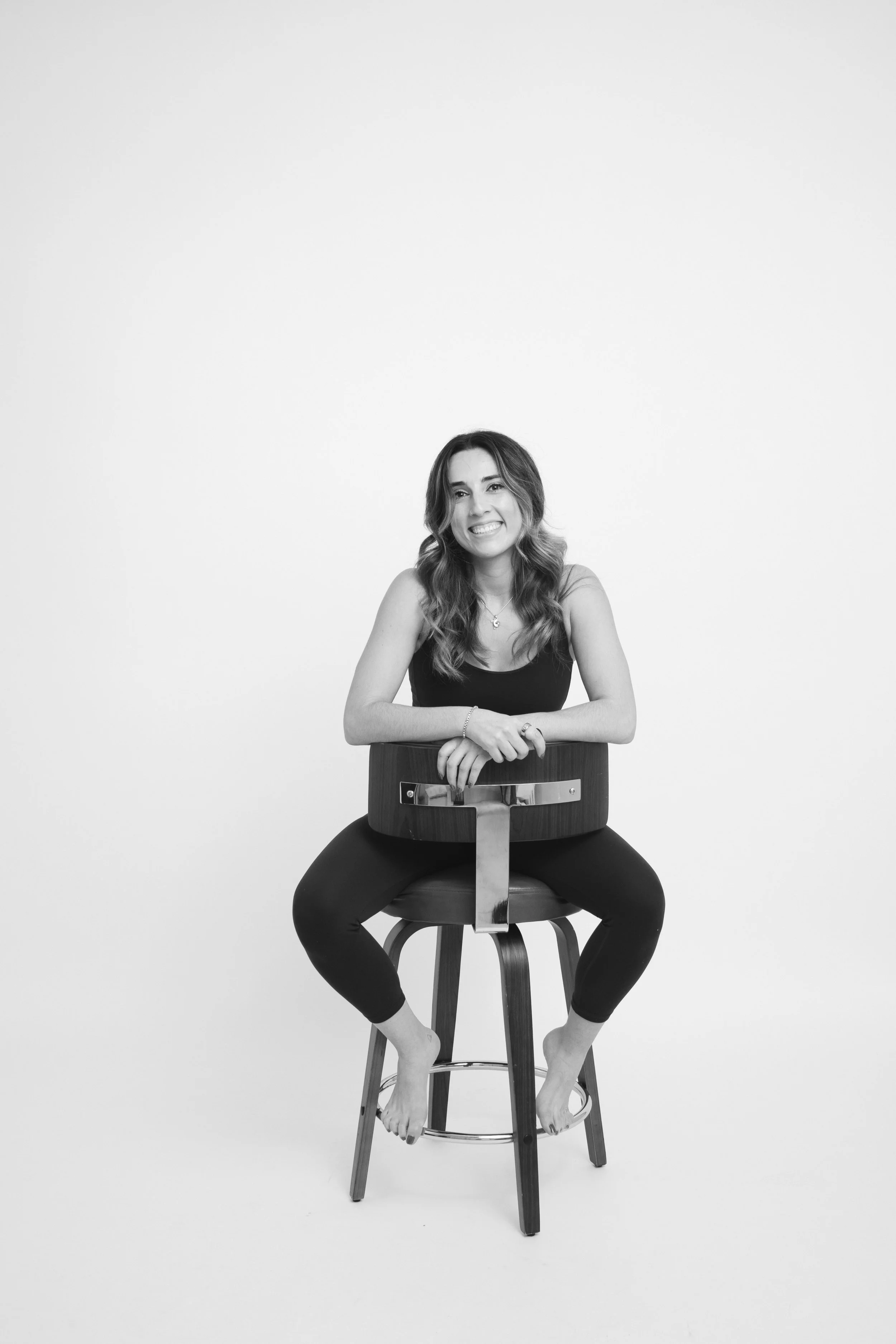
I'm Gina, a Classical Pilates instructor and long-distance runner based in San Francisco. I believe the best training doesn't just make you stronger—it teaches you how to understand the body you're asking to perform. My approach is technical, curious, and deeply rooted in the Classical method, using Pilates to develop the strength, mobility, coordination, and control that carry into everything you love to do. Running is where I get to feel that work come alive—and I want to help you experience that connection between the Mat and your miles, too.